
Crypto contract trading platforms let you engage with the market by speculating on price moves without holding the underlying asset. Using futures or perpetual contracts, you can go long or short and apply leverage to amplify outcomes—potential profits as well as losses. These platforms offer advanced order types and risk controls, but derivatives are complex and risky; start small, use stop-losses, and never trade more than you can afford to lose.
Choosing the right broker is key to success in 2026. The best services differ from the rest in fees, security, and user experience. Each crypto contract trading platform has a standout feature that sets it apart from competitors. Your choice affects how well you manage risks and make profits.
We looked at eight top players: BloFin, Margex, PrimeXBT, Bybit, and KCEX, along with leaders in the market. These platforms are recognized for their high trade volume, which reflects their popularity and liquidity in the crypto market. Our tests checked trading depth, contract support, and KYC rules. You’ll see which platforms are best for anonymous trading or regulated environments. This helps you find the right fit for your risk level.
Best Crypto Contract Trading Platforms in 2026: Full Overview
Take a quick glance at the leading crypto contract trading platforms before we explore each in detail:
- CoinFutures – A privacy-first exchange with a gamified design and leverage options reaching 1,000x.
- Binance – The world’s largest futures platform with 530+ trading pairs, advanced tools, and leverage up to 125x.
- MEXC – Known for ultra-low fees and high-leverage trading on 600+ markets, with maker fees from 0% and leverage up to 400x.
- BloFin – A no-KYC derivatives platform featuring AI-driven trading bots and leverage up to 150x.
- Margex – Designed for beginners with a $50 welcome bonus, no KYC required, and leverage up to 100x.
- PrimeXBT – High-leverage futures and CFD trading with optional KYC and up to 1,000x leverage.
- Bybit – A trusted exchange offering 718 contracts, smart trading tools, and leverage from 25x to 125x.
- KCEX – Licensed and regulated with over 800 pairs and ultra-competitive fees (0% maker / 0.01% taker).
What is Crypto Contract Trading?
Crypto contract trading involves speculating on cryptocurrency price movements without actually owning the underlying asset. Instead of buying Bitcoin or Ethereum directly, you trade contracts—either futures contracts with set expiration dates or perpetual contracts with no expiry—that track the asset’s price. Beyond futures and perpetuals, traders seeking defined-risk strategies can explore our guide to the best crypto options trading platform options, where premiums cap downside while maintaining upside exposure.
Unlike spot trading where you profit only when prices rise, contract trading lets you profit in both directions by going long (betting prices will rise) or short (betting prices will fall). Platforms also offer leverage, allowing you to control larger positions with smaller capital. For example, with 10x leverage, $100 can control $1,000 worth of cryptocurrency, amplifying both potential profits and potential losses.
Top 8 Crypto Contract Trading Platforms to try in 2026: Reviewed
Finding the right crypto trading platform for contract trading can change your trading game. Each crypto trading platform has unique features, fees, and leverage options. They cater to different trading styles and experience levels.
These platforms operate within the broader cryptocurrency market, offering tools and features tailored to this dynamic environment.
We’ve looked at the top crypto trading platforms for security, fees, leverage, asset variety, and user experience. These platforms are the most reliable and feature-rich for traders today.
1. CoinFutures – Best Platform for Anonymous High-Leverage Trading
CoinFutures is known for its unique approach to volatility trading, making prediction-based trading its standout feature. You don’t need to own actual cryptocurrency to trade here. Instead, you predict price movements on major digital assets like BTC, ETH, DOGE, TRX, and LTC, each available as a trading pair.
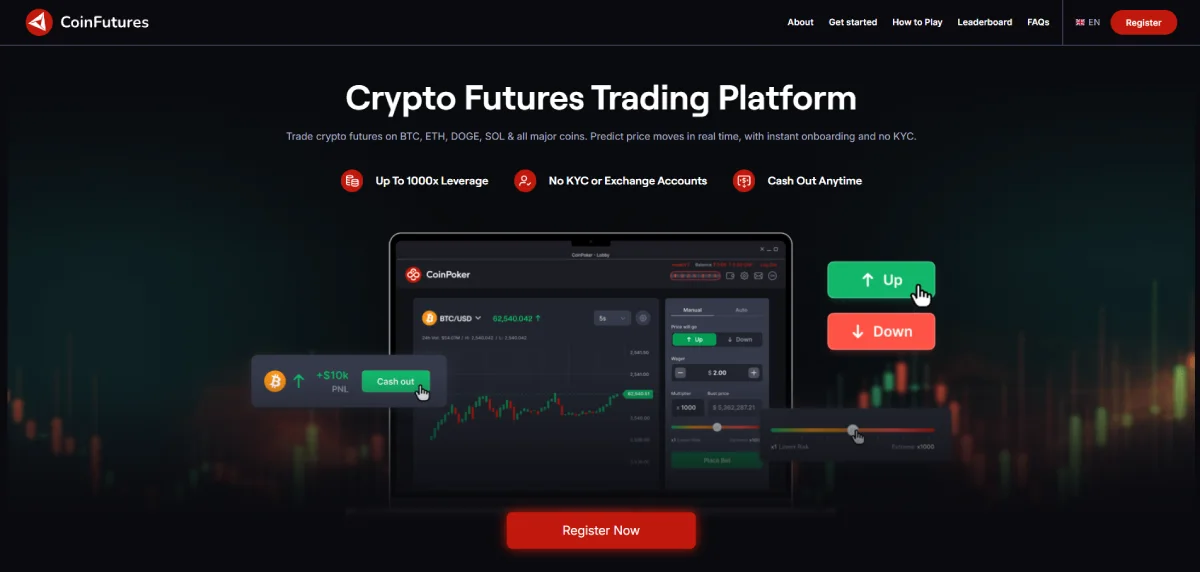
Setting up a trading account is quick and easy. After registration, you can deposit funds using various methods to start trading immediately. The platform allows users to buy crypto and sell crypto directly, supporting both new and experienced traders.
The platform offers up to 1000x leverage with no KYC requirements. This means your initial investment can be amplified, increasing your potential profits as well as potential losses—so risk management is crucial if you want to make more money. CoinFutures also provides different margin modes, including isolated and cross margin, to help you manage risk and collateral more effectively.
You can place different types of orders, such as a market order for immediate execution at the best available price, or a limit order to execute only at your specified price. Limit orders are a cost effective trading option due to their low fees.
CoinFutures uses a prediction-based system instead of traditional futures contracts. This makes it easier for beginners while keeping advanced features for experienced traders. The platform provides up-to-date market trends and crypto prices, helping you make informed decisions.
Security is a priority, with features like anti-phishing codes to help protect your account.
Pros:
- No KYC required for trading
- Up to 1000x leverage available
- Gamified trading interface
- Quick account setup
- Flexible fee structure
Cons:
- Limited to 5 trading assets
- Newer platform with less market history
- Prediction-based model may confuse traditional traders
2. Binance – All-Rounder for Futures Trading
Binance leads the crypto futures market with over 530 futures trading pairs and up to 125x leverage, according to CoinMarketCap’s derivatives data. It serves both beginners and professional traders with its dual-mode interface system, including a Pro Mode for advanced users.
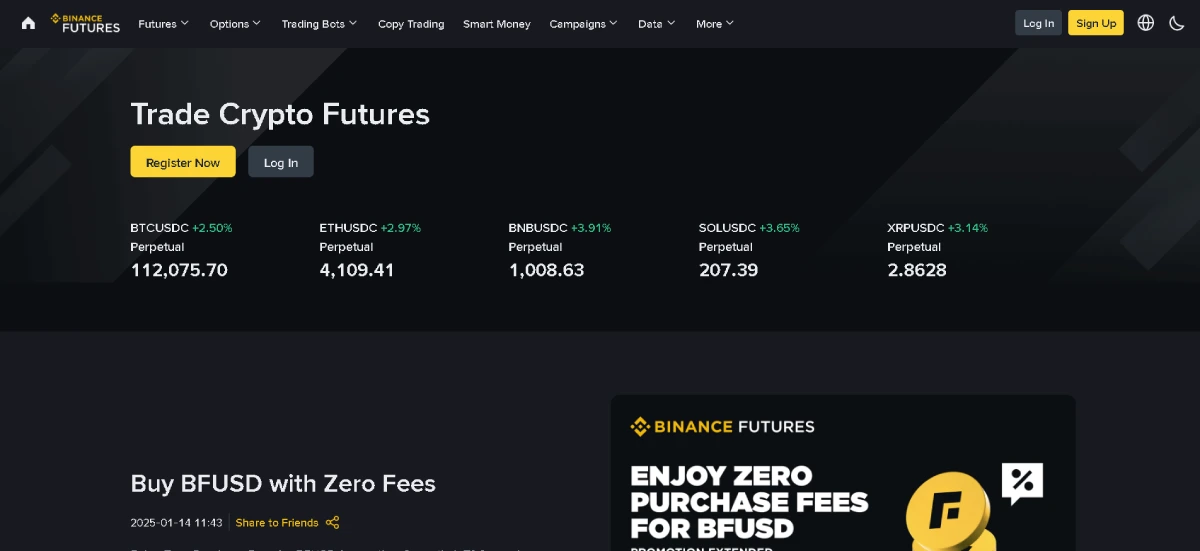
Binance offers both spot market and derivatives trading, allowing users to trade cryptocurrencies, buy crypto, and sell crypto across a wide range of crypto assets and digital assets. You can set up a trading account and deposit funds using various methods such as bank transfer, Google Pay, and Apple Pay. The crypto contract trading platform supports margin trading with both isolated and cross margin modes for flexible risk management.
For perpetual contracts, Binance uses a funding rate mechanism to keep futures prices aligned with the spot market. Order types include limit order, market order, and limit orders, with a competitive maker fee structure for cost effective trading. The platform provides up-to-date crypto prices and market trends, helping users make informed decisions.
Binance is a trusted crypto exchange with strong security features, including anti phishing codes. Its standout feature is the combination of deep liquidity, advanced analytics, and a wide selection of trading pairs. The key difference is Binance’s ability to offer both high potential profits and risk management tools, allowing users to maximize more money from their initial investment while being aware of potential losses.
Pros:
- Largest selection of futures trading pairs (530+)
- High liquidity across all markets
- Advanced trading tools and analytics
- Multiple interface options, including Pro Mode
- Strong security track record with anti phishing codes
- Cost effective trading with competitive maker fees
Cons:
- Complex interface for beginners
- Higher fees compared to some competitors
- Restricted in certain countries
3. MEXC – Top Pick for Fee-Sensitive Traders
MEXC attracts cost-conscious traders with its ultra-low fee structure, offering cost effective trading due to a 0.00% maker fee and only 0.02% taker fees. This makes it one of the most affordable options for frequent trading, especially when using limit orders, limit order, or market order types.
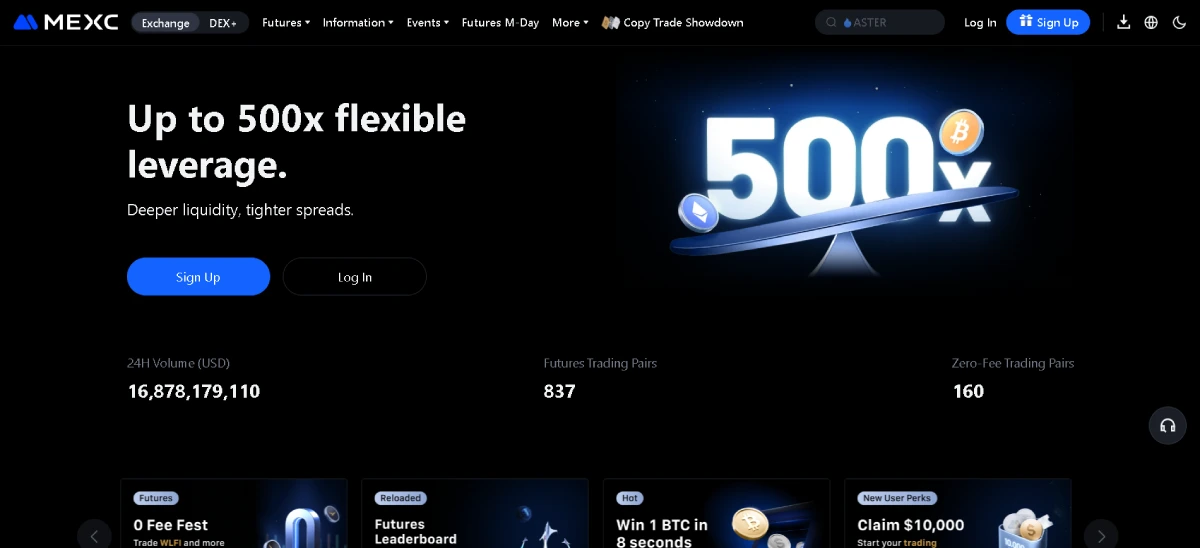
You can access up to 400x leverage across 600+ trading pairs, including a wide range of crypto assets and digital assets. MEXC allows users to trade cryptocurrencies, buy crypto, and sell crypto, providing flexibility for different trading strategies. The platform also offers a demo trading mode that lets you practice contract trading strategies without risking real money, helping you understand potential profits, potential losses, and how your initial investment can lead to more money with leverage.
Setting up a trading account is straightforward, with multiple deposit funds options such as bank transfer, Google Pay, and Apple Pay. For advanced users, pro mode unlocks sophisticated trading tools and analysis features.
MEXC regularly lists new and emerging crypto assets before other exchanges, giving you early access to potentially profitable trading opportunities in smaller-cap assets. The platform provides up to date crypto prices and market trends, helping you make informed decisions. A standout feature of MEXC is its combination of low fees, high leverage, and early access to new tokens.
Pros:
- Extremely low trading fees (0% maker fee for cost effective trading)
- Wide selection of trading pairs (600+ crypto assets and digital assets)
- Demo trading mode available
- Early listing of new tokens
- Up to 400x leverage
- Pro mode for advanced traders
- Multiple deposit funds options (bank transfer, Google Pay, Apple Pay)
- Up to date crypto prices and market trends
Cons:
- Lower liquidity on smaller pairs
- Less established than major competitors
- Limited advanced trading features
4. BloFin – Automation Without KYC
BloFin combines privacy-focused trading with advanced automation tools. Creating a trading account is quick and easy, allowing you to deposit funds via multiple methods and start trading right away. You can trade cryptocurrencies, buy crypto, and sell crypto with up to 150x leverage across 500+ trading pairs, including a wide range of crypto assets and digital assets, without completing KYC verification for withdrawals up to $20,000.

The platform includes built-in trading bots and automation features. These tools help you execute complex trading strategies, such as using a limit order, market order, or limit orders, to maximize potential profits and manage potential losses—even when you’re not actively monitoring the markets. BloFin also supports cost effective trading with competitive fees, helping you make more money from your initial investment.
BloFin’s interface balances simplicity with functionality. You get access to professional-grade tools, up-to-date crypto prices, and real-time market trends without the overwhelming complexity found on some larger platforms. A standout feature is the inclusion of anti phishing codes for enhanced security, ensuring your trading account and assets remain protected.
Pros:
- No KYC up to $20K withdrawals
- Built-in trading automation
- 500+ trading pairs available
- User-friendly interface
- 150x leverage option
- Up-to-date crypto prices and market trends
- Anti phishing codes for security
- Cost effective trading
Cons:
- Lower maximum leverage than some competitors
- Smaller user base
- Limited educational resources
5. Margex – Beginner-Friendly Bonus System
Margex aims to make crypto contract trading accessible for beginners by offering a straightforward account setup and multiple easy deposit options. The platform supports new traders with generous welcome bonuses and clear educational resources that explain the basics of futures and leveraged trading, helping users get started with confidence.
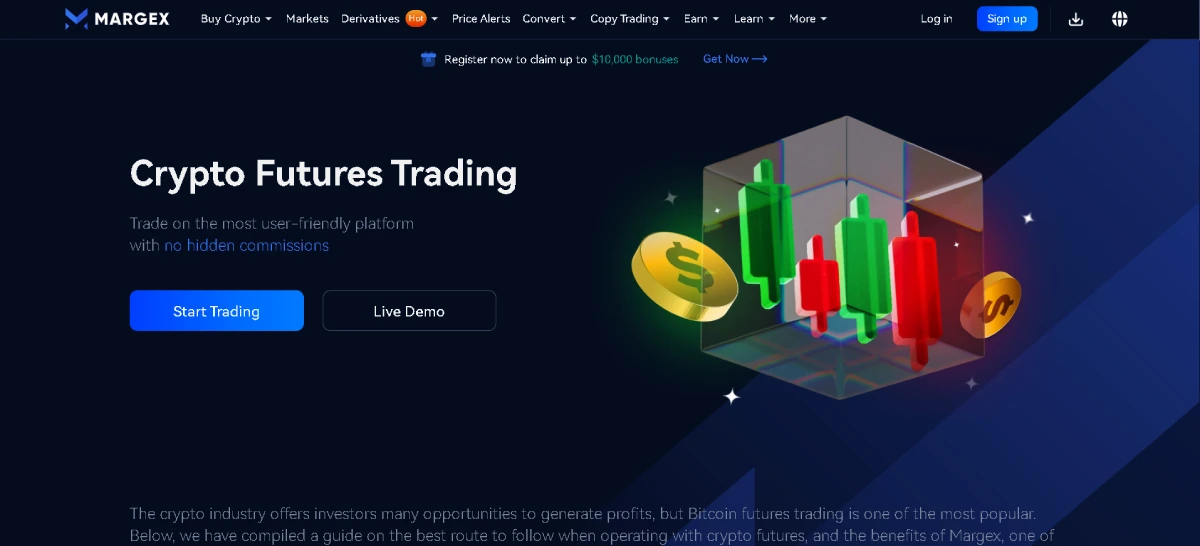
You can start with an initial investment and use up to 100x leverage on major trading pairs, including a wide range of crypto assets and digital assets. Margex enables you to trade cryptocurrencies, buy crypto when you expect prices to rise, and sell crypto to realize potential profits. The platform provides up-to-date crypto prices and market trends, helping you make informed decisions and manage potential losses while aiming to make more money through cost effective trading.
A standout feature of Margex is its anti-phishing codes, which enhance security alongside other protective measures. The platform supports both limit orders and market orders, giving you flexibility in how you execute trades. The interface is clean and intuitive, making it easy for beginners to navigate without being overwhelmed by excessive features.
Pros:
- Excellent for beginners
- Generous bonus programs
- Educational resources included
- Simple, clean interface
- Good customer support
- Cost effective trading with flexible order types
- Strong security with anti-phishing codes
Cons:
- Limited advanced features
- Smaller selection of trading pairs
- Lower maximum leverage
6. PrimeXBT – Aggressive Leverage Options
PrimeXBT makes it easy to create a trading account and deposit funds using various methods, including bank cards. Once your account is set up, you can trade cryptocurrencies, buy crypto, and sell crypto across a wide range of trading pairs, crypto assets, and digital assets. The platform provides up-to-date crypto prices and market trends, helping you make informed decisions.
PrimeXBT offers some of the highest leverage in the industry, with up to 1000x on select cryptocurrency pairs. This allows you to start with a small initial investment and potentially earn more money, but it also increases potential profits and potential losses, so risk management is crucial. The platform supports both limit orders and market orders, giving you flexibility in how you execute trades. Limit order and limit orders let you set specific entry or exit prices, while a market order executes immediately at the best available price.
PrimeXBT also provides access to traditional markets including forex, commodities, and stock indices, making it a standout feature for those seeking multi-asset and cost-effective trading. The platform’s trading engine can handle high-frequency trading and large order volumes without significant slippage.
Security is a priority, with anti-phishing codes available to help protect your account. The crypto contract trading platform includes copy trading features that let you follow successful traders’ strategies, which can be valuable for learning new approaches to contract trading.
Pros:
- Up to 1000x leverage available
- Multi-asset trading platform
- Advanced charting tools
- Copy trading features
- Fast order execution
- Cost-effective trading
- Anti-phishing codes for security
Cons:
- High leverage increases risk and potential losses
- Complex for beginners
- Limited cryptocurrency selection
7. Bybit – Smart Tools and Contract Variety
Bybit combines user-friendly design with sophisticated trading tools, making it a standout feature among trusted crypto exchanges. The platform offers perpetual contract trading, futures, and options across a wide range of trading pairs, crypto assets, and digital assets. Bybit’s perpetual contracts allow users to speculate on crypto prices without owning the underlying asset, and the funding rate mechanism ensures that longs and shorts are balanced by periodic payments between traders.
Creating a trading account on Bybit is straightforward, and users can easily deposit funds via various methods to start trading. Once funded, you can trade cryptocurrencies, buy crypto when you expect prices to rise, or sell crypto to realize gains or manage risk. Bybit supports both limit orders and market orders, giving traders flexibility to execute trades at specific prices or instantly at the best available rate. The platform’s cost effective trading is enhanced by competitive fees, especially when using limit order and limit orders.
Bybit provides up-to-date crypto prices and market trends, helping users make informed decisions. The platform highlights potential profits and potential losses, allowing traders to manage their initial investment and use leverage to potentially make more money. Risk management tools help limit potential losses in volatile markets.
Security is a priority, with anti phishing codes and other protective features safeguarding your trading account. Bybit’s mobile app delivers full trading functionality, letting you manage positions and monitor digital assets on the go.
Pros:
- Multiple contract types available, including perpetual contracts
- Excellent mobile app
- Advanced order types (limit order, market order, conditional, trailing stop)
- Insurance fund protection
- Regular promotions
- Cost effective trading
- Standout security features like anti phishing codes
Cons:
- Geographic restrictions apply
- Moderate fee structure
- Learning curve for advanced features
8. KCEX – Low-Fee Structure with Proper Licensing
KCEX is a trusted crypto exchange that operates with proper regulatory licensing while maintaining a competitive and cost effective trading fee structure. Creating a trading account is straightforward, and users can easily deposit funds via various methods to start trading. The platform supports a wide range of trading pairs, allowing you to trade cryptocurrencies, buy crypto, and sell crypto across diverse crypto assets and digital assets. KCEX provides up to date crypto prices and market trends, helping users make informed decisions.

You can trade with leverage up to 125x across major trading pairs, increasing your potential profits while also exposing your initial investment to potential losses. This leverage gives traders the opportunity to make more money, but it is important to manage risk carefully. KCEX offers both basic and advanced trading interfaces, supporting different order types such as market order, limit order, and limit orders for flexible trading strategies.
A standout feature of KCEX is its strong security measures, including anti phishing codes to protect users from phishing attacks. The platform emphasizes compliance and security, maintaining segregated customer funds and conducting regular security audits to safeguard your trading capital.
Pros:
- Proper regulatory licensing
- Competitive and cost effective trading fee structure
- Strong security measures, including anti phishing codes
- Reliable customer support
- Multiple interface options
- Easy trading account setup and deposit funds process
- Wide selection of trading pairs, crypto assets, and digital assets
- Up to date crypto prices and market trends
Cons:
- Smaller trading community
- Limited advanced features
- Fewer promotional offers
How We Chose the Best Platforms
We ranked the best platforms for crypto contract trading by testing them and analyzing their features for crypto trading. Our methodology for contract trading crypto covered six key areas that affect trading success, including trade volume as a key metric for ranking platforms. This method gives you honest advice based on real results.
Our methodology reflects real conditions in cryptocurrency contract trading, emphasizing maker/taker fees, funding costs, and slippage under live order-book liquidity.
We checked leverage options from 25x to 1000x. But, leverage alone doesn’t make a crypto contract trading platform great. We also looked at risk management tools and margin controls, including the importance of maintenance margin—the minimum equity required in your account to avoid margin calls and liquidation.
| Platform | Max Leverage | Trading Pairs | KYC Required | Key Feature |
| CoinFutures | 1000x | 5 assets | No | Gamified trading |
| Binance | 125x | 530+ | Yes | Largest selection |
| MEXC | 400x | 600+ | Yes | Ultra-low fees |
| BloFin | 150x | 500+ | No (up to $20K) | Built-in automation |
| PrimeXBT | 1000x | Limited | Yes | Multi-asset trading |
Fee analysis was a big part of our testing. We compared maker and taker fees for different trading volumes. We also checked withdrawal costs and deposit methods.
KYC requirements varied a lot between platforms. We considered both privacy-focused traders and those who prefer regulated environments. Platforms with higher withdrawal limits without strict verification got bonus points.
Contract variety and trading pairs were key in our assessment. Platforms with 500+ trading options were ranked higher for diversification. We tested major digital assets, including cryptocurrencies, altcoins, and traditional assets.
We tested user experience on both mobile apps and web interfaces. We looked at demo modes, educational resources, and customer support quality. Platforms with easy designs and lots of learning materials ranked better.
Security was the most important factor in our evaluation. We checked cold storage, insurance, and regulatory compliance. Platform transparency about their security protocols was a key difference that set some platforms apart.
Our scoring system considered different factors based on trader needs. Beginners need easy-to-use platforms and educational resources. Advanced traders need complex tools and high leverage. We aimed to meet both needs while keeping safety in mind.
How to Start Crypto Contract Trading: A Step-by-Step Guide
Ready to start crypto contract trading? Here’s a quick guide on how to begin with CoinFutures, one of the most beginner-friendly platforms with no KYC requirements and up to 1000x leverage.
Step 1: Create Your CoinFutures Account
Visit the CoinFutures website and click “Sign Up”. Enter your email address and create a strong password.
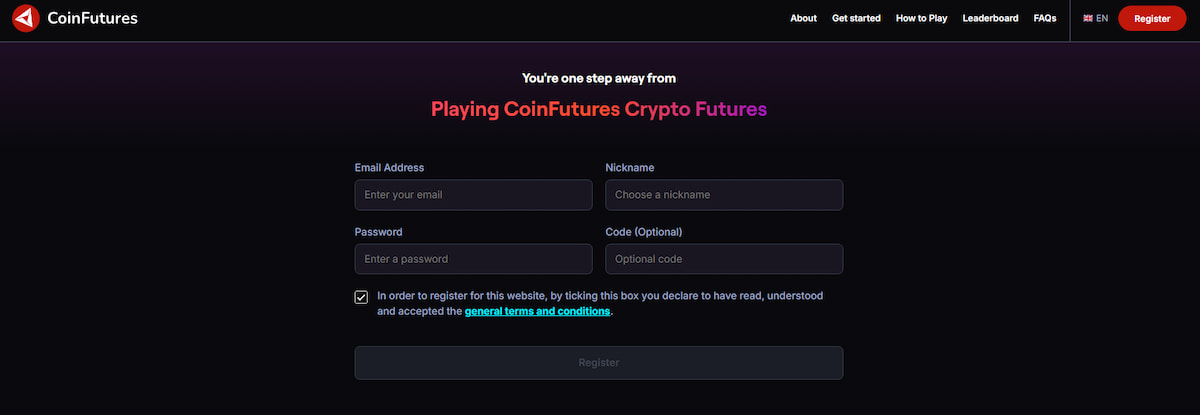
CoinFutures is a no-KYC platform, so there’s no need to provide your ID, selfie, or proof of address for registration or trading. Your account is ready instantly.
Step 2: Download the CoinPoker App
CoinFutures operates through the CoinPoker interface. Download the app for your device (Windows, macOS, or Android) from the official website and log in with your CoinFutures credentials.
Step 3: Fund Your Account
Click the wallet icon in the top-right corner to deposit funds. CoinFutures accepts Bitcoin (BTC), Ethereum (ETH), Tether (USDT), Dogecoin (DOGE), and Litecoin (LTC).
Don’t have crypto yet? You can buy it directly on the platform using a credit card, debit card, Apple Pay, Google Pay, or PIX. There’s no minimum deposit requirement, and deposits are processed almost instantly with no platform fees.
Step 4: Navigate to Crypto Futures
Open the CoinPoker app and go to the “Crypto Futures” tab. Select from five available assets: BTC, ETH, DOGE, TRX, or LTC. If you’re a beginner, start with BTC or ETH for more predictable price movements.
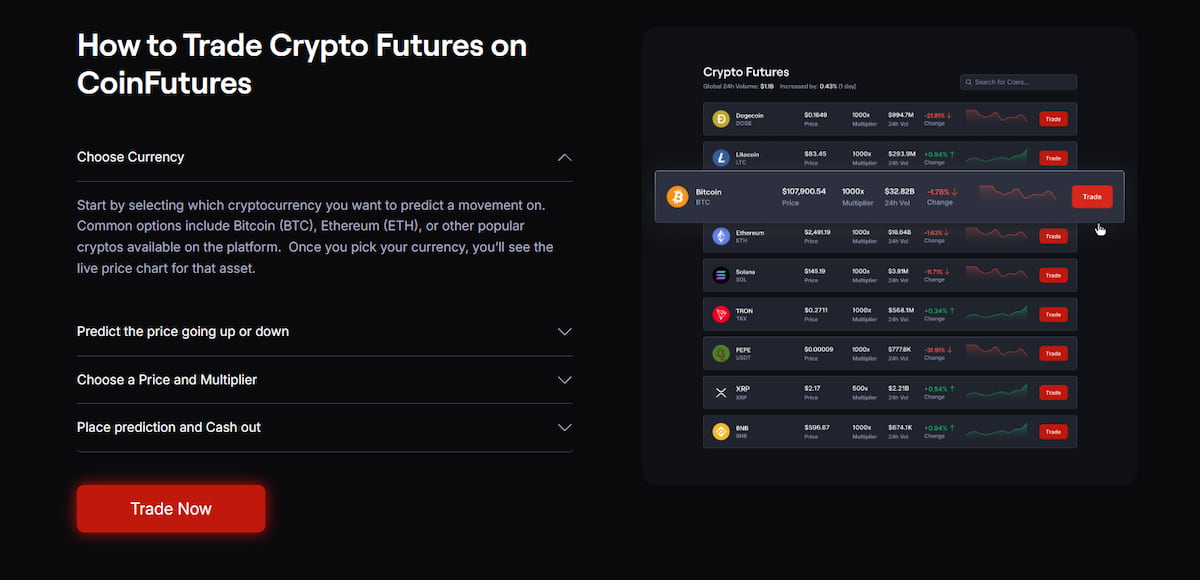
[IMAGE: CoinFutures trading interface in CoinPoker app] Alt text: CoinFutures crypto futures trading interface
Step 5: Place Your Trade
Choose your position direction:
- Select UP if you predict the price will rise (going long)
- Select DOWN if you predict the price will fall (going short)
Set your leverage level (beginners should start with 2x-5x), enter your bet size, and configure risk controls:
- Stop-Loss: Automatically exits your position to limit losses
- Take-Profit: Locks in your gains at a predetermined price
CoinFutures offers two fee structures:
- PnL Fee: Pay approximately 5% only on profitable trades
- Flat Fee: Pay 1-3% upfront regardless of the outcome
Review your settings and click to place your trade.
Step 6: Monitor Your Position and Withdraw
Track your open positions in real-time from the “Active Positions” section. You can manually close your position anytime or let your automated stop-loss and take-profit orders execute.
Check the public leaderboard to see how you rank against other traders.
Ready to withdraw? Click on your wallet, enter your crypto wallet address, select the cryptocurrency, and confirm the transaction. CoinFutures processes most withdrawals up to 25K USDT instantly without requiring KYC.
Note: In rare cases, the platform may request KYC verification as required by its gaming license.
Benefits of Using Crypto Contract Platforms
The best crypto contract trading platforms offer powerful tools that give you significant advantages for crypto trading over traditional spot trading. These sophisticated systems allow you to trade digital assets, maximize potential profits, and manage potential losses more effectively. They also provide cost effective trading through competitive fees and leverage options, while helping you stay informed about market trends to make better decisions.

The platforms we reviewed offer unique benefits that can transform your trading strategy. You gain access to advanced features that were once available only to institutional investors.
Trade Long and Short
Contract trading platforms allow you to benefit from both upward and downward movements in cryptocurrency prices. By opening a long position, you speculate on rising prices and can make profits if the market goes up, while risking losses if it falls. With a short position, you bet on declining prices and can gain when prices drop, but you face losses if the market moves higher instead.
To enter or exit these positions, traders can use a market order, which executes immediately at the best available price, or a limit order, which only executes when the market reaches a specific, predetermined price.
This flexibility proves invaluable during bear markets. While spot traders can only buy and hold, you can generate profits even when Bitcoin or Ethereum prices decline sharply.
Platforms like Binance and MEXC make short selling simple through their intuitive interfaces. You can switch between long and short positions with just a few clicks.
Access High Leverage
Crypto contract trading platforms offer leverage up to 1000x on certain trading pairs, a figure consistent with market data from CoinGlass and The Block Research. This means you can control more money—such as $100,000 worth of cryptocurrency—with just a small initial investment, for example, $100 in your account.
CoinFutures and PrimeXBT lead the market with their high leverage offerings. These platforms allow experienced traders to amplify their possible returns significantly by using leverage to control a larger position size than their initial investment would normally allow. For an in-depth analysis of high-leverage platforms across futures, perpetuals, and margin trading, check our comprehensive crypto leverage trading platform comparison.
However, leveraged trading also requires you to maintain a maintenance margin, which is a minimum amount of equity in your account (often a percentage like 25% of the total position value) to avoid margin calls or liquidation. While leverage can multiply your profits, it can also increase your losses. Always use leverage responsibly and never risk more than you can afford to lose.
Lower Trading Costs
Many contract trading platforms offer competitive fee structures that can save you money and enable cost effective trading. MEXC provides 0% maker fee, while KCEX offers some of the lowest taker fees in the industry. The maker fee is a key component of the overall fee structure, and platforms with low or zero maker fees are especially attractive for frequent traders.
These cost savings add up quickly for active traders. If you trade $10,000 daily, saving just 0.1% in fees equals $10 per day or $3,650 annually.
The fee advantages become even more pronounced with higher trade volume, as platforms often offer additional discounts or tiered fee reductions for users with substantial trading activity. Professional traders often choose platforms based on their fee structures and the potential for greater savings as their trade volume increases.
Risk Management Tools
Advanced risk management features set crypto contract trading platforms apart from basic exchanges. You get access to stop-loss orders, take-profit levels, and position sizing tools.
Stop-loss orders automatically close your position when prices move against you. This feature helps limit your potential losses during volatile market conditions.
Take-profit orders lock in your gains when prices reach your target levels. You don’t need to monitor the markets constantly to secure your profits.
Many platforms also offer trailing stops and partial close options. These tools help you optimize your exit strategies and maximize your returns.
Maintaining the required maintenance margin is essential to avoid liquidation. If your account equity falls below the maintenance margin threshold, your position may be liquidated to prevent further losses.
| Platform | Max Leverage | Maker Fees | Risk Tools | Long/Short |
| CoinFutures | 1000x | 0.02% | Advanced | Yes |
| Binance | 125x | 0.02% | Comprehensive | Yes |
| MEXC | 200x | 0% | Standard | Yes |
| BloFin | 100x | 0.02% | Automated | Yes |
The combination of these benefits makes contract trading platforms attractive to serious cryptocurrency traders. You gain professional-grade tools that can improve your trading performance and risk management capabilities.
Security and Regulation of Crypto Contract Trading Platforms
Crypto contract trading platforms differ widely in how they protect funds and user data. Top exchanges store 90–95% of assets in cold wallets to keep them offline and safe, while hot wallets handle only daily transactions.

Core protections include two-factor authentication (2FA) for logins and withdrawals, withdrawal whitelists to limit where funds can go, anti phishing codes to help prevent phishing attacks by verifying authentic platform communications, and sometimes time delays on large withdrawals. Many leading platforms also use multi-signature wallets, independent security audits, real-time threat monitoring, and encrypted data transmission to safeguard assets and personal information.
Regulation and KYC rules vary: a trusted crypto exchange that is licensed, like Binance, requires full identity checks, offering stronger oversight but less privacy; privacy-focused platforms like CoinFutures allow trading without KYC but may face legal restrictions. Some platforms also hold insurance funds, but coverage differs and may be limited.
Where you live affects access — especially for U.S. traders — and shows why checking legal status matters. Finally, your own practices count: use strong passwords, enable 2FA, and stay alert to phishing. Even the safest platform can’t protect against personal mistakes.
Tips for Beginners in Crypto Contract Trading
Start with major cryptocurrencies like Bitcoin and Ethereum for better liquidity and stability if you’re new to contract trading crypto. Set up your trading account on a reputable platform, and deposit funds using convenient methods such as bank transfer, Google Pay, or Apple Pay. Many platforms also offer demo accounts, like those on MEXC, to practice crypto trading without risking real money.
Keep risk low — never trade more than your initial investment that you can afford to lose and begin with low leverage (2x–5x) until you gain experience. Always set stop-loss orders before trading to protect your funds and limit potential losses, helping you avoid emotional decisions.
Pick a platform that matches your needs: KYC platforms (e.g., Binance) offer more support, while no-KYC platforms (e.g., CoinFutures) provide privacy but fewer protections. Favor beginner-friendly exchanges like Margex with simple interfaces and bonuses.
Focus on learning, not quick profits. Use platform tutorials, market analyses, and start with small trade sizes to understand features and behavior. Risk only 1–2% of your capital per trade and increase gradually after consistent results. Stay up to date with market trends and price movements to make informed decisions in the fast-changing world of crypto trading.
Lastly, manage emotions carefully — fear and greed can hurt more than market swings. Stick to your plan and build discipline step by step.
Conclusion on Crypto Contract Trading Platforms
Selecting the right crypto contract trading platform depends on your objectives, level of experience, and what you value most as a trader. CoinFutures is attractive for traders seeking anonymity and very high leverage, Binance provides the widest range of features within a highly regulated environment, while MEXC is often preferred for its competitive low-fee structure.
Decide which factors matter most to you—such as leverage options, trading fees, privacy, or educational resources—and begin with small trades so you can learn how each platform works. Many seasoned traders actually use multiple platforms to take advantage of their different strengths.
Since the cryptocurrency and derivatives markets change rapidly, it’s important to stay informed about new tools, security improvements, and regulatory developments. Most importantly, follow strong risk management practices and only trade with funds you can afford to lose.
FAQs
What are crypto contract trading platforms and how do they differ from regular exchanges?
Crypto contract trading platforms let you trade cryptocurrency derivatives like futures and perpetual contracts. A key difference between these platforms and regular spot exchanges is that, on spot exchanges, you buy and hold coins, while contract trading allows you to speculate on price movements with leverage and profit in any market condition without owning the underlying assets. Perpetual contracts, a popular type of contract available on these platforms, have no set expiry date, enabling traders to maintain positions as long as they wish.
Which crypto contract trading platform offers the highest leverage in 2026?
In 2026, platforms such as CoinFutures and PrimeXBT offer some of the highest leverage in crypto contract trading, with leverage of up to 1000x. This allows traders to control large positions with a relatively small initial investment. CoinFutures is known for anonymous trading without KYC requirements, while PrimeXBT requires identity verification. However, it’s important to note that higher leverage significantly increases both potential profits and potential losses.
Can I trade crypto contracts anonymously without KYC verification?
Yes, platforms like CoinFutures and BloFin offer anonymous contract trading without KYC. They allow you to trade with high leverage while keeping your identity private. But, these platforms usually have lower withdrawal limits than regulated exchanges like Binance.
What are the typical fees?
Fees vary across crypto contract trading platforms. MEXC offers some of the lowest fees, with a 0% maker fee and a 0.01% taker fee, making it ideal for cost-effective trading. KCEX also provides a competitive fee structure with a 0% maker fee. Binance charges around 0.02% maker and 0.04% taker fees but offers more features. Always consider withdrawal fees and the funding rate—especially for perpetual contracts, where the funding rate can affect your trading costs over time—when calculating total costs.
Is crypto contract trading suitable for beginners?
Crypto contract trading can be good for beginners if done carefully. The first step is to set up a trading account on platforms like MEXC or Margex. After registering, deposit funds using a bank card or other available methods. Many platforms also offer a demo trading account, allowing you to practice without risking real money. Use educational resources, begin with established cryptocurrencies like Bitcoin and Ethereum, use low leverage, and practice risk management. Never risk more than you can afford to lose, and start with small positions to learn.
How do I choose between KYC and no-KYC options?
When comparing crypto contract trading platforms, your choice depends on what you value most. KYC platforms like Binance offer higher withdrawal limits and stronger regulatory protections, but they require identity verification for your trading account. Verified accounts on these platforms often have higher trading volume limits, allowing you to transact larger amounts. No-KYC platforms like CoinFutures and BloFin provide greater privacy and faster account setup, but they typically have lower withdrawal limits and lower trading volume limits. Consider your trading volume, privacy preferences, and risk tolerance when deciding.
What security measures should I look for?
While browsing crypto contract trading platforms, look for providers that store 90–95% of customer funds in cold storage and offer two-factor authentication (2FA). They should also provide anti-phishing codes to verify authentic platform communications, withdrawal whitelisting, and insurance coverage. Regulated platforms like Binance typically offer the highest security standards. Always enable all available security features and use strong, unique passwords.
Can I use mobile apps for crypto contract trading?
Yes, most leading platforms offer mobile apps with full trading functionality. Binance, MEXC, and Bybit provide robust mobile experiences with advanced charting and real-time notifications. Mobile trading lets you monitor positions and execute trades anywhere, but ensure you’re using secure networks and have proper security measures enabled.
What’s the difference between futures and perpetual contracts?
Futures contracts have specific expiration dates and settlement terms, while perpetual contracts have no expiry date and can be held indefinitely. Perpetual contracts use a funding rate to keep contract prices close to the spot market and actual crypto prices. For a comprehensive comparison of platforms specializing in futures trading, including delivery vs perpetual mechanics and leverage limits, visit our detailed crypto futures trading platform guide.
The funding rate is periodically exchanged between traders—when the rate is positive, longs pay shorts, and when negative, shorts pay longs. This mechanism helps ensure that perpetual contract prices track the spot market and reflect real-time crypto prices. Most platforms focus on perpetual contracts due to their flexibility and continuous trading nature.
How much money do I need to start crypto contract trading?
You can start with an initial investment as low as $10-50 on most platforms. However, having an initial investment of $100-500 provides better flexibility for risk management. The key is proper position sizing, not account size. Some platforms like Margex offer welcome bonuses to help boost your initial investment.
What are the best crypto contract trading platforms for low fees?
MEXC and KCEX are strong options for fee-conscious traders, as both exchanges offer 0% maker fees — a key advantage for cost-efficient trading. MEXC charges just 0.01% taker fees across 600+ trading pairs, while KCEX delivers similarly competitive rates supported by recognized licensing and regulatory standards.
Do crypto contract trading platforms offer demo accounts?
Yes, many platforms offer demo trading accounts with virtual funds. MEXC provides a comprehensive demo trading experience that closely simulates real market conditions, enabling users to practice strategies without risking actual money. These demo accounts are ideal for beginners to explore platform features, test different trading approaches, and understand leverage effects before transitioning to a live account with real capital.