
You’re entering crypto futures as digital assets hit trillion-dollar scale, with millions trading across 450+ exchanges. Choosing the right Crypto Futures Trading Platform requires strong security, liquidity, transparent fees, and a clean interface. U.S. traders should prioritize compliance, proof-of-reserves, insurance, and reliable 2FA.
Leading venues offer clear maker/taker pricing and high leverage, with CoinFutures, MEXC, Binance, OKX, and Margex standing out. This guide explains how these platforms compare and how futures, margin, funding, and liquidation work in 2026.
Best Crypto Futures Platforms Ranked & Compared
- CoinFutures – Lightning fast execution with high leverage and professional risk controls.
- MEXC – 0% maker fees, deep perpetual markets, and up to 200x leverage.
- OKX – Advanced margin systems, strong liquidity, and clean pro-grade interface.
- Binance – Trusted platform with massive derivatives liquidity, delivery futures, reliable insurance protection, and strong security and regulatory compliance.
- Margex – No-KYC access, simple layout, and risk-managed leverage for beginners.
- BloFin – Bot-friendly futures exchange with fast routing and automation tools.
- KCEX – Ultra-low spreads, low-fee trading structure, and hundreds of futures pairs.
- Bybit – Strong perpetual markets, deep books, advanced tools for active traders, and TradingView integration for enhanced charting and usability.
- PrimeXBT – Multi-asset derivatives platform with high leverage and cross-market exposure.
- KuCoin – Beginner-friendly futures with broad coin support and intuitive UX.
In-Depth Reviews of the Leading Futures Trading Exchanges
You want speed, clarity, and tools that make each order count. The best crypto futures trading platforms balance power with simple controls so you can act fast and stay safe. Advanced trading and advanced trading tools are essential for experienced users, offering features like multiple order types, deep liquidity, and automation to support sophisticated trading needs. As you compare delivery vs perpetual crypto futures, weigh the engine behind execution, the fee schedule, leverage limits—which can vary significantly by platform—and mobile parity for on-the-go decisions. For active strategies, developing trading strategies and choosing a trading strategy that fits your risk profile, low fees crypto futures trading can define your edge when volume spikes.
1. CoinFutures – High-Leverage Platform With Ultra-Fast Execution
CoinFutures is designed for traders who prioritize speed, precision, and clean execution. The platform allows users to trade futures with leverage up to 1000x, enabling aggressive strategies without the capital burden. With these features, traders profit from both rising and falling markets by taking advantage of price movements in either direction. Its interface is streamlined and optimized for rapid entries, exits, and order adjustments.
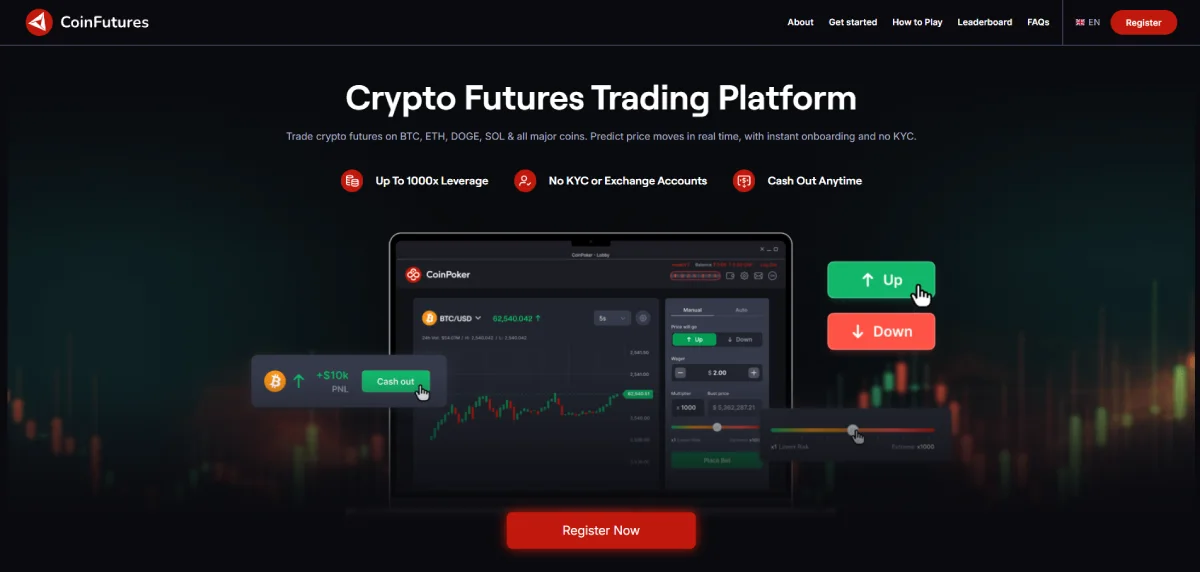
The matching engine performs consistently even during high-volatility spikes. Advanced risk-management tools help maintain margin discipline and prevent unnecessary liquidations, while also allowing traders to speculate on price movements without owning the underlying asset. This makes CoinFutures a strong choice for traders who demand fast fills and reliable performance.
Pros:
- Extremely fast execution with stable system performance
- Up to 1000x leverage on simulated futures
- Professional order types and responsive interface
- Strong risk-management tools and clear liquidation metrics
Cons:
- Limited options for users who need broader spot trading features
2. MEXC – Ultra-Deep Market Selection and Low Trading Fees
MEXC offers one of the largest selections of futures markets, with over 600 perpetual and delivery pairs available, covering a wide variety of contract types such as perpetual futures, delivery futures, and options. The exchange is known for its ultra-competitive pricing, including 0% maker and 0.02% taker fees on many futures contracts. Traders can use up to 200x leverage, making it a strong fit for short-term, high-velocity strategies.
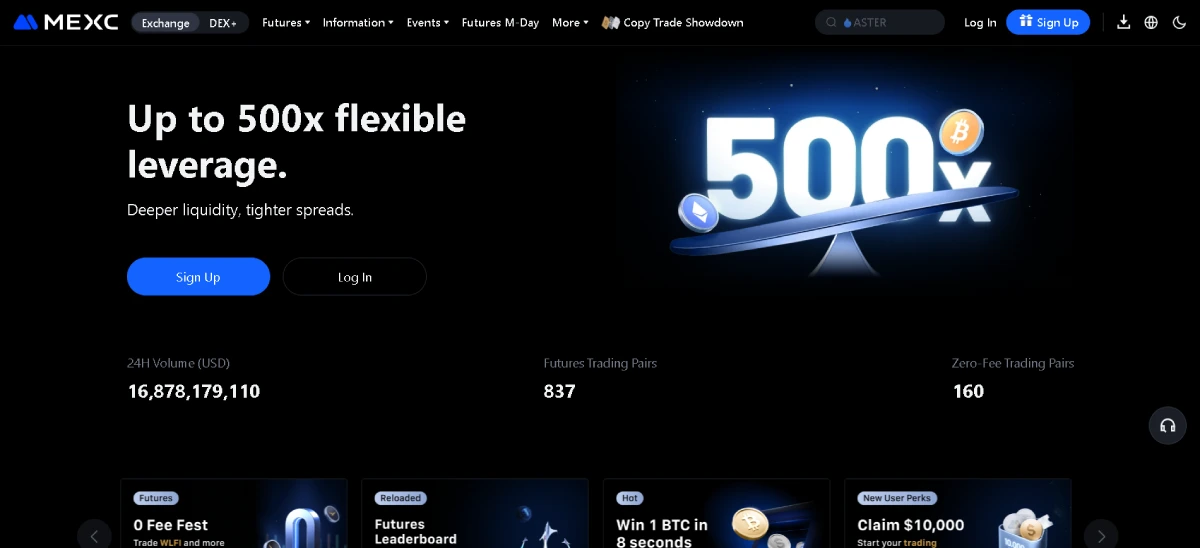
Its interface is fast, structured, and easy to navigate even for active scalpers. MEXC often lists new market pairs earlier than competitors, attracting token hunters and trend traders. The platform allows users to place both buy and sell orders, enabling flexible trading strategies and risk management. This combination of depth and affordability makes MEXC highly popular among futures specialists.
Pros:
- 0% maker and low taker fees
- 600+ futures markets across many asset categories
- Up to 200x leverage for aggressive strategies
- Fast and intuitive trading interface
Cons:
- No-KYC structure limits higher withdrawal thresholds
3. Binance – Global Leader in Derivatives Volume and Product Depth
Binance offers industry-leading liquidity that supports smooth fills across perpetual, delivery, and quarterly futures. Traders gain access to hundreds of supported assets with competitive maker/taker fees and optional fee reductions via BNB.
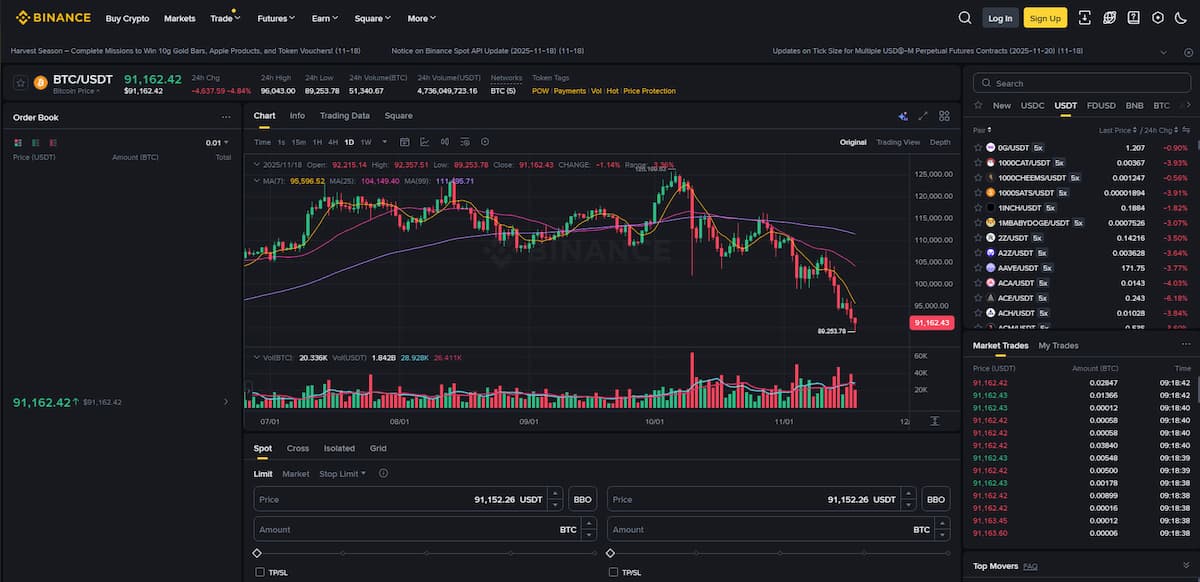
The exchange integrates strong security features including SAFU insurance, 2FA, and regular proof-of-reserves updates. Binance’s order books remain stable even during extreme volatility, which makes it attractive to active derivatives traders. Its comprehensive suite of analytics, charting tools, and automation options enhance overall usability. The platform is suitable for beginners and experienced traders, though availability varies by jurisdiction, and Binance serves both retail and institutional investors depending on regulatory approval.
Binance supports a wide selection of contract types, including perpetual and delivery contracts, where settlement can occur in the underlying asset or a stablecoin equivalent.
Pros:
- Deepest global liquidity for futures trading
- Wide selection of perpetual and delivery contracts
- Strong security architecture backed by the SAFU fund
- Competitive trading fees and optional BNB discounts
Cons:
- Restricted access for U.S. users due to regulatory limitations
4. OKX – Pro-Grade Futures Tools With Strong Risk Controls
OKX blends a clean, professional UI with powerful derivatives infrastructure, and is recognized for its strength in trading derivatives across multiple markets. It supports USDT-M, Coin-M, perpetual, and delivery futures with leverage up to 100x, and offers a range of leveraged products for different risk profiles. Traders benefit from advanced features such as portfolio margin, hedge mode, grid trading, and automated strategies.
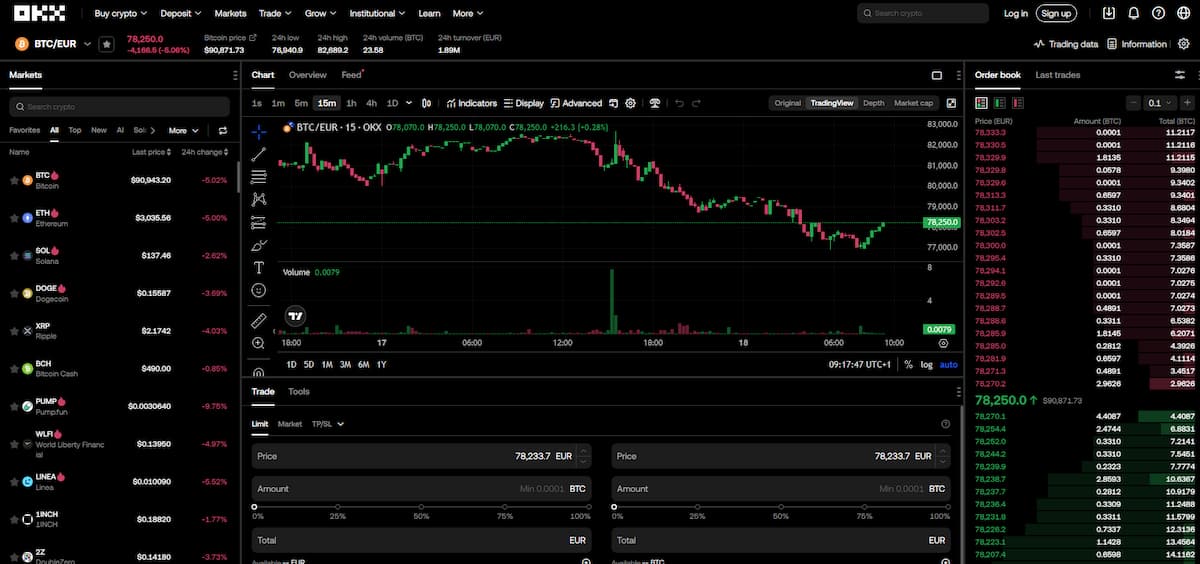
Liquidity remains consistent across major pairs, allowing tighter spreads and predictable execution. OKX also integrates broader Web3 tools, giving users access to wallets, DApps, and staking within the same ecosystem. Regional restrictions apply, but its features remain among the strongest in the derivatives market.
Pros:
- Advanced margin systems and hedge mode support
- Up to 100x leverage with stable liquidity
- Strong derivatives depth paired with Web3 integrations
- Clean and efficient trading interface
Cons:
- Certain features are unavailable in restricted jurisdictions
5. Margex – User-Friendly No-KYC Futures Platform With Clear Risk Limits
Margex focuses on simplicity, transparency, and risk-controlled leverage, making it ideal for beginners and intermediate futures traders. The platform offers up to 100x leverage with clear liquidation parameters that prevent unfair price manipulation. Margex also caters to crypto holders seeking a secure and straightforward trading experience.
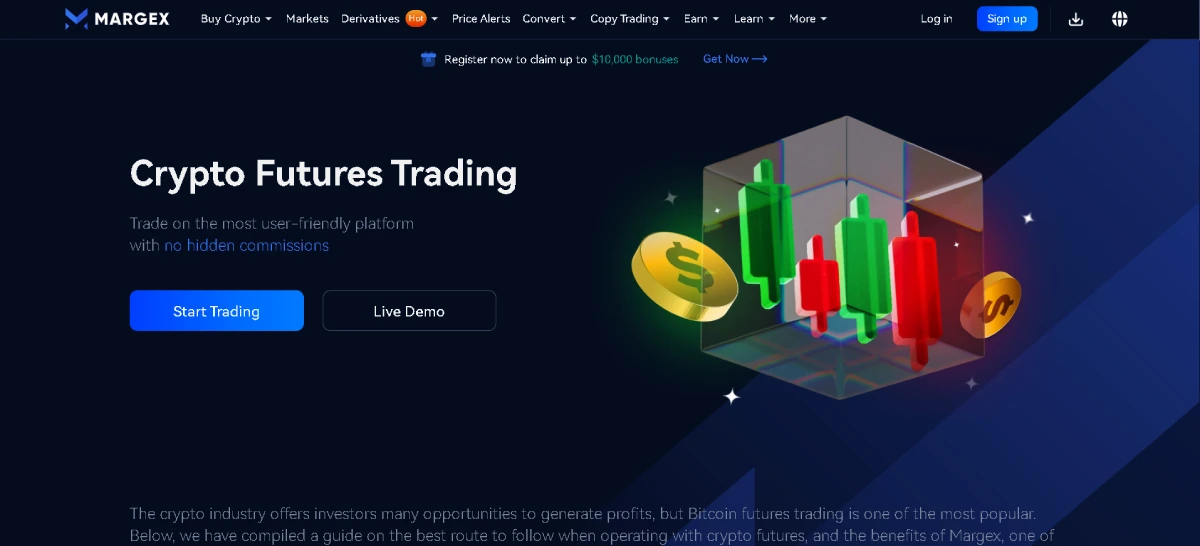
A no-KYC setup allows fast onboarding, and users can easily transfer funds to start trading while still maintaining strong security through multisig cold storage. Its interface is minimalistic, easy to navigate, and built for clean position management. Margex emphasizes responsible trading by providing intuitive margin tools and clear protective mechanics. This makes it a solid option for traders seeking a safer, more guided futures environment.
Pros:
- No-KYC access with fast registration
- Clear margin rules and strong risk-management settings
- Beginner-friendly interface with clean layout
- Secure multisig cold-storage fund protection
Cons:
- Fewer futures markets compared to top-tier exchanges
What Are Cryptocurrency Futures?
Cryptocurrency futures let you trade the price of Bitcoin, Ethereum, and other coins without holding them. A clear cryptocurrency futures definition is this: they are contracts that track a coin’s future price so you can long or short the market with margin. A futures contract is traded on exchanges to gain exposure to digital currencies like Bitcoin and Ether, allowing participants to buy or sell these assets without direct ownership. In plain terms, you use a contract to speculate or hedge while posting collateral instead of owning the asset.
You will see two main styles when comparing delivery vs perpetual crypto futures. Delivery futures have fixed expiries—weekly, monthly, or quarterly—so the contract settles on a date. Perpetual futures do not expire; an hourly or eight-hour funding fee helps keep the contract close to spot. This is the core of crypto derivatives explained by major venues like Binance and MEXC. Traders profit by taking long or short positions, and traders speculate on price movements to maximize returns in different market conditions.

Because these are leveraged instruments, your gains and losses move faster than spot. Binance offers up to 125x on select pairs, while MEXC goes as high as 200x, which demands strict risk control. Most platforms use maker/taker fees—Binance at 0.02% maker and 0.05% taker, MEXC at 0% and 0.02%—so your trading costs depend on how you place orders.
Futures also let you short with ease, build hedges, and balance a portfolio during volatile moves. You can choose cross or isolated margin, watch maintenance thresholds, and rely on liquidation engines that close positions when equity drops too far. Compared to spot exchanges, futures trading is more complex and less beginner-friendly, as it involves leverage, margin, and additional risk management. United States traders should also review venue access and product availability before placing any order, since rules vary by state and platform.
How Crypto Futures Trading Works
You post margin as collateral to open a long or short. Your position size and chosen leverage set the initial margin, while maintenance margin and real-time PnL shape your risk. In margin trading crypto, your equity moves with price; you need to have enough money in your account to open and maintain positions. If it falls toward the liquidation price, the exchange reduces or closes the position to protect the system.
Perpetual contracts stay near spot through funding fees crypto, which pass between longs and shorts at fixed intervals. Maker and taker fees apply on every order; limit orders often pay less to reward liquidity. High-volume tiers can cut costs further for active accounts.
Execution quality matters. Deep books on Binance can improve fills and reduce slippage during volatile moves. Low-fee venues like MEXC may boost cost efficiency for frequent traders. You should check spreads, deposit and withdrawal fees, and any conversion charges when moving funds.
Exchanges offer cross and isolated margin. Cross margin shares one collateral pool across positions, which can smooth drawdowns but link risks. Isolated margin ring-fences a single trade so losses do not spill over. Liquidations trigger when equity drops below maintenance, and matching engines aim for fair closes to avoid loss spirals. However, using high leverage increases potential losses and exposes you to significant liquidation risks.
To master how to trade crypto futures, plan your entries, watch the liquidation price, and size positions to fit your risk. Track funding fees crypto across sessions, and review maker/taker schedules before you place orders. Always assess your risk tolerance and be aware of the significant risks involved in crypto futures trading. This is the discipline behind effective margin trading crypto. Managing profits and losses effectively is key to long-term success.
Crypto Futures vs Spot vs Options Trading
When you compare crypto futures vs spot vs options trading, start with the basics. Spot trading swaps assets at the current price and, by default, uses no leverage. It fits simple accumulation and long holding. You own the coin outright, which avoids funding fees and margin calls but limits your ability to short or hedge. Unlike traditional investing, where you profit only if the asset’s value rises, futures trading allows for profit opportunities without owning the underlying cryptocurrency.
Futures are part of derivatives vs spot crypto, offering leveraged long and short exposure. You can trade delivery or perpetual contracts, but you must manage margin, funding fees, and liquidation risk. By taking long and short positions in futures, traders can profit in both rising and falling markets, not just when prices go up. High-liquidity venues like Binance help with precise entries and exits, while low-fee platforms such as MEXC support active, cost‑efficient tactics.

Options add a different layer in crypto futures vs spot vs options trading. Calls and puts create asymmetric payoffs and define risk at the premium paid. Traders seeking defined-risk strategies with capped downside can explore crypto options trading platform options, where premium payment limits maximum loss while maintaining directional or volatility exposure.
Pricing depends on implied volatility and the Greeks, which adds complexity. You can tailor hedging strategies crypto with spreads or protective puts, though execution needs careful timing and sizing.
In practice, derivatives vs spot crypto comes down to your goals. Spot suits gradual buildup and custody. Futures can amplify gains and losses and demand strict risk rules. Options can cap downside but require you to understand volatility. Across all approaches, review exchange security, including cold storage levels near 90–95%, insurance terms, and regulatory posture before you commit capital.
- Spot: direct ownership, simple tracking, no leverage by default.
- Futures: leverage, short access, funding fees, and liquidation control.
- Options: defined risk tools, volatility pricing, flexible hedging strategies crypto.
Use platform features to match your plan. On Binance, deep books can refine entries for derivatives vs spot crypto. On MEXC, low fees can improve win rates for frequent trades. As you weigh crypto futures vs spot vs options trading, align position size, margin, and order types with clear rules that you can follow in fast markets.
Essential Things to Know Before Trading Futures
You trade in a fast market where small moves can hit big positions. Trading in volatile markets adds extra challenges, as rapid price swings can quickly impact your positions. Before you size up, weigh the risks and benefits of crypto futures trading across leverage, fees, and collateral. A clear plan helps you read volatility and act with discipline, not impulse. When trading derivatives, it’s crucial to understand their unique risks and how platform features can affect your strategy.
Benefits of Trading Crypto Futures
You can act on both directions of the market. Go long when you expect a rally, or short when momentum turns. That simple flexibility is one of the core benefits of crypto futures, letting you pursue opportunity in bull and bear cycles without moving your spot stack. Many platforms also allow you to trade futures with advanced features, including different contract types and leverage options designed for a comprehensive trading experience.
Futures also help you hedge crypto portfolio risk. If you hold Bitcoin or Ethereum on spot, you can open a short futures position to offset downside while keeping your coins in cold storage. Delivery contracts let you time a hedge for specific dates, while perpetuals offer ongoing exposure with funding payments instead of roll costs.
Capital efficiency stands out. With high leverage crypto futures, you can control larger notional size using less margin, which keeps more cash free for other trades or yield strategies. Traders comparing leverage ratios across futures, perpetuals, and margin products can reference crypto leverage trading platform comparisons for detailed analysis of capital efficiency and risk controls. Used with discipline, this structure supports tighter risk budgets and clear liquidation levels.
Most leading venues arm you with professional trading tools so you can refine entries and exits. Advanced trading and advanced trading tools, such as multiple order types, deep liquidity, and customizable interfaces, are available for experienced users. Expect TradingView charting, depth-of-market views, multi-trigger order types, and APIs for bots or quant models.
TradingView integration is a key feature, allowing seamless access to advanced charting tools and trade execution. These features make it easier to test ideas, automate parts of your system, and react fast during volatility.
- Deep liquidity on exchanges like Binance helps reduce slippage during large orders.
- Low costs matter: MEXC’s 0% maker and 0.02% taker fees can add up for active traders.
- Security features such as cold storage, insurance for hot wallets, and 2FA protect accounts.
- Transparent fee schedules make it easier to model trade expectancy and size positions.
Used alongside a long-term spot plan, the benefits of crypto futures include tactical hedges, efficient balance-sheet use, and rapid execution. When you combine deep markets, robust safeguards, and professional trading tools, you gain a nimble way to manage risk and maximize profits through disciplined trading, staying engaged through every phase of the cycle.
Pros and Cons of Crypto Futures Trading
You weigh upside and downside every time you place a trade. Understanding the risks benefits crypto futures trading helps you pick tools that fit your plan and risk budget without guesswork.
Pros of Crypto Futures Trading
- Leverage boosts capital efficiency, letting you control larger positions with less cash.
Leveraged products like futures contracts are designed for this capital efficiency, but
require careful risk management. - Shorting gives you a way to hedge or seek gains in bear markets. You can act on downside
views rather than sitting out a trend. - Perpetual and delivery contracts add flexibility. You can hold a perp for active strategies
or use dated futures for clearer funding and rollover planning. - Professional features matter. APIs, bracket and OCO orders, and advanced margin modes
support systematic trading and tighter risk controls. - Fee structures can help. Maker rebates, volume-tier discounts, and deep books reduce
slippage. Exchanges like Binance and MEXC offer strong liquidity and security measures
such as SAFU funds and majority cold storage.
Cons of Crypto Futures Trading
Every edge has a trade-off. You need to map crypto derivatives pros and cons to your
time frame, bankroll, and location.
- Liquidation risk grows with higher leverage. One sharp move can wipe a position if
stops and margin settings are loose. High leverage increases potential losses and
exposes traders to significant risks and liquidation risks that can quickly erode capital. - Funding fees on perpetuals add ongoing costs. Spreads, conversions, and withdrawals can
quietly drain returns. - Platform risk never vanishes. Even with insurance funds or audits, exchange solvency and
downtime remain factors you must price in. - Access varies by region. Product menus differ between Binance and
Binance.US, and no-KYC limits
on MEXC can cap larger operations. - Discipline decides outcomes. Position sizing, stop placement, and margin mode selection
are non-negotiable in leveraged crypto trading.
Use a checklist approach to the risks benefits crypto futures trading: size positions to volatility, track funding, and confirm order types before entry. This keeps your plan aligned with real-world
crypto derivatives pros and cons, and helps you compare futures trading to spot exchanges, which are generally simpler and less risky for beginners.
Step-by-Step Guide: How to Trade Crypto Futures
You can learn how to trade crypto futures with a clear plan and a focus on risk. New users can follow these steps to get started. Start by picking from the best crypto futures trading platforms that match your needs for safety, fees, and liquidity. As you move through each step, keep an eye on delivery vs perpetual crypto futures, order costs, and your exposure.
Step 1: Create an Account on a Trusted Futures Exchange
Choose a venue known for robust security and deep books, such as Binance, MEXC, OKX, Margex, or CoinFutures, and make sure to select a trusted platform for added safety and regulatory compliance. In the United States, confirm FinCEN MSB compliance where applicable and look for cold storage, insurance for hot wallets, 2FA, hardware security key support, and withdrawal whitelisting.
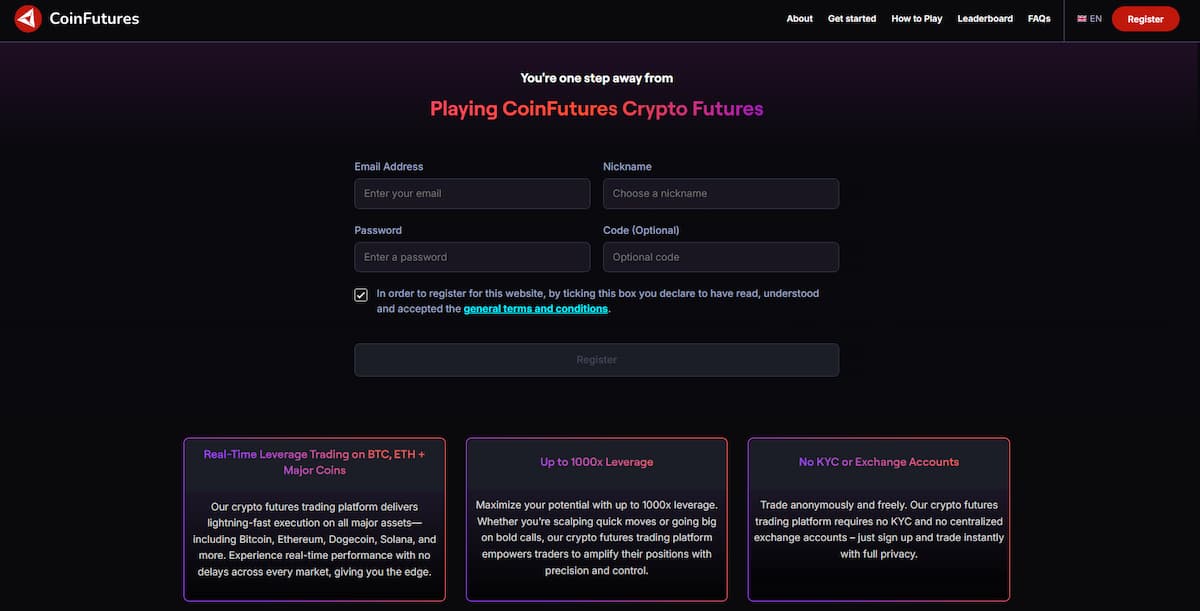
Complete KYC if you want higher limits and full features. Compare fee tiers and liquidity before you commit so you know how to trade crypto futures on terms that fit your strategy—new users can benefit from easy onboarding processes, often requiring just an email to register.
Step 2: Deposit Crypto or Fiat Funds
Begin funding account crypto with a method that balances speed and cost—transfer funds from your bank or wallet to your trading account. Bank transfers, debit or credit cards, and on-chain deposits are common. Binance supports bank transfers, cards, and third‑party processors. MEXC focuses on crypto-to-crypto and offers bank/SEPA/cards in select regions. OKX supports cards, local transfers, and P2P.
Check deposit and conversion fees, expected processing time, and any limits. Keep a small buffer for trading fees and funding payments on perpetuals, and ensure you have enough money in your account to cover trading and any additional fees.
Step 3: Select a Futures Market & Choose Leverage
Decide between delivery vs perpetual crypto futures, and consider the different contract types available, such as options and other derivatives, to match your trading strategy. Delivery contracts suit dated hedges; perpetuals provide ongoing exposure with funding payments. On high-liquidity venues like Binance, pick leverage that reflects current volatility, and always check the leverage limits set by your chosen platform. On low-fee venues such as MEXC, leverage can reach 200x, but use it sparingly.
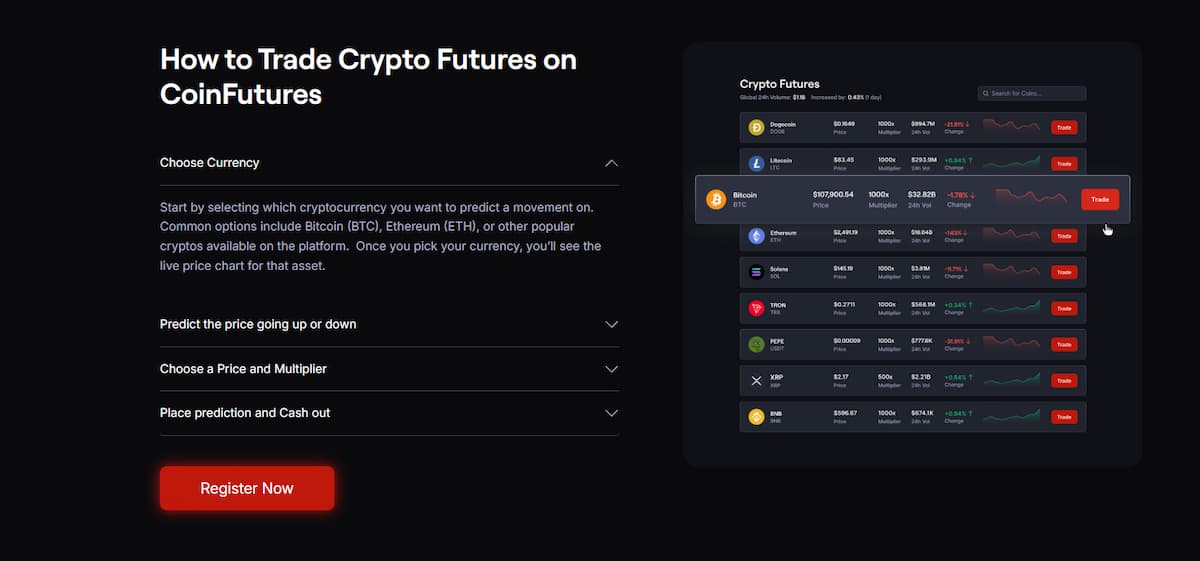
Prefer isolated margin for new trades to cap downside. Set your stop and invalidation level before entry so you stay aligned with how to trade crypto futures in a disciplined way.
Step 4: Place the Trade and Monitor Liquidation Levels
Use limit orders to reduce taker fees and slippage when possible, and place both buy and sell orders for flexible trading. Track funding fees if you run perpetual positions and review maintenance margin, liquidation price, and unrealized PnL in real time.
Adjust position size and stops to keep the liquidation price well away from spot. Consider partial profit-taking and audit fee impact across the best crypto futures trading platforms you use to refine fills and costs, noting that futures are actively traded on these platforms.
Conclusion
In 2026, the ideal Crypto Futures Trading Platform must prioritize safety above all. Look for cold-storage custody, 2FA, insurance protection, and transparent fee schedules. The best crypto futures trading platforms combine strong security with deep liquidity, fast routing, and tools that match different trading styles. CoinFutures stands out as the best overall choice, offering exceptional speed, high-leverage precision, and reliable execution.
MEXC appeals to low-fee traders with 0% maker and 0.02% taker rates, while Binance delivers global depth, perpetual and delivery futures, and SAFU protection. OKX and Margex add clean interfaces and risk-aware controls suitable for everyday traders.
Focus on the risks and benefits of crypto futures trading, align leverage with volatility, and manage funding fees. With the right platform and a disciplined plan, U.S. traders can approach futures markets with confidence.
FAQ
What makes a crypto futures trading platform “best” for you in 2026?
You want a balance of security, liquidity, fees, and execution speed. Look for majority cold storage (90–95%), proof-of-reserves, 2FA and hardware key support, and clear insurance policies. Compare total trading cost—maker/taker fees, funding rates, spreads, and withdrawal/deposit fees. Platforms like CoinFutures focus on fast order matching and high-leverage precision; Binance offers deep liquidity and both delivery and perpetual futures; MEXC emphasizes low fees and high leverage with no-KYC limits.
How do delivery futures differ from perpetual futures?
Delivery futures have set expiries (weekly, monthly, quarterly) and settle at expiry. Perpetual futures never expire and use a funding fee between longs and shorts to keep prices near spot. Delivery contracts suit time-specific hedges; perpetuals suit continuous exposure, but you must manage funding costs.
What is the maker/taker fee model and why does it matter?
Market makers place limit orders that add liquidity to the market, often benefiting from lower fees. Market takers, in contrast, execute market orders or marketable limit orders that remove liquidity, typically incurring higher fees. For example, Binance Futures charges 0.02% for makers and 0.05% for takers, while MEXC offers 0% maker fees and 0.02% taker fees. Choosing the right order type, along with your volume tier, can have a significant impact on total trading costs—especially for high-frequency trading strategies.
Which platforms offer high leverage for crypto futures?
Binance offers up to 125x on selected perpetual pairs. MEXC goes up to 200x with 0% maker/0.02% taker fees. CoinFutures emphasizes fast execution at high leverage across perpetuals and delivery contracts. Use leverage conservatively and monitor liquidation levels closely.
Is there a no-KYC crypto futures platform I can use?
MEXC allows no-KYC trading with daily withdrawals up to 10 BTC (higher for KYC Level 1). Limits, features, and fiat access can vary by region. Always review local regulations and consider completing KYC if you need higher limits or broader services.